A Therapist For When Work Starts Costing Too Much
I Serve Ontario professionals who are reaching the point where functioning at work is costing too much outside of it.
I’m a Registered Psychotherapist and Supervisor-Educator with a background in healthcare and institutional settings. Much of my work has been alongside people in Kitchener-Waterloo, responsible for patients, staff, students, or high-impact decisions. By the time they reach out, they are often close to stepping back from work, already on leave, or trying to understand why they can no longer recover between shifts.

You don’t have to be certain you need therapy to reach out.

Experienced and professional care for Caregivers
Many of the people I meet are not overwhelmed because they lack coping skills. They stayed steady for a long time. What changed is that the responsibility accumulated without reset. They begin second-guessing decisions, replaying interactions after hours, or feeling pressure before the day even starts.

I’m Erika Mills, a therapist for people whose work asks a lot of them
My training developed inside environments where people are expected to keep functioning under pressure, which shapes how I approach therapy.
People usually want to know a few practical things before reaching out.

If you reach out, we start by figuring out what changed in your work experience and why it now feels unsustainable. I’ll tell you what I think is happening and what recovery would realistically involve. From there you decide whether working together makes sense.
What The Consult is For
Your free 20 minute consult is to clarify three things:
1. What kind of depletion this is
2. What kind of help you need
3. Whether I am the right fit for your situation
There is no expectation to continue, If another type of support fits better, I will say so.
You can take time to think afterward. No decision needed on the call.
- Burnout | Executive Therapy and Coaching | Grief | Moral Injury | Procrastination | Recovery | Stress Leave
Why You Procrastinate When You’re Burnt Out (Not Lazy)
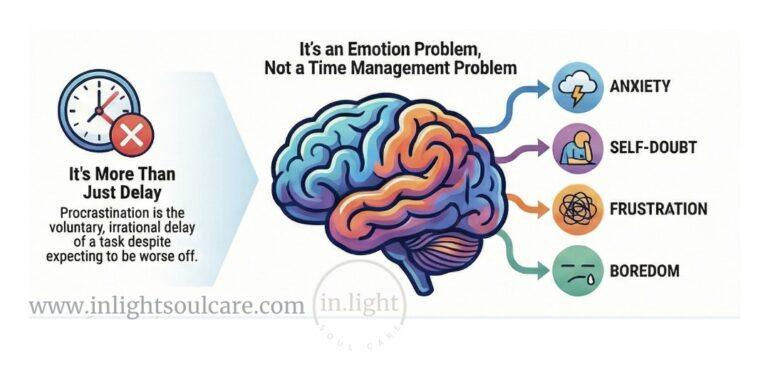
Procrastination is not always a motivation problem. In burnout, it is often a nervous system signal.
When your system has been overextended for too long, starting tasks can feel strangely impossible, even when the work matters to you. This is not laziness and it is not a character flaw. It is what happens when effort, responsibility, and pressure have outpaced your capacity to recover.
In burnout, procrastination often functions as a form of self-protection. Your mind and body slow you down because pushing forward no longer feels safe. Understanding this shift is essential, because trying to fix burnout-related procrastination with productivity tools alone usually makes things worse.
This article explores why procrastination shows up during burnout, how to tell the difference between avoidance and exhaustion, and what recovery-focused approaches actually help people regain momentum without forcing themselves past the breaking point.
5 Factors Influencing Informal Caregiver Burnout
Caregiver Burnout and Loss
Burnout and Procrastination Is an Emotion-Regulation Problem, Not a Time-Management One
Burnout and procrastination changes how motivation and focus work. Tasks that once felt manageable can begin to trigger avoidance, fog, or paralysis. This article looks at the relationship between burnout and procrastination, explaining why it happens and how to work with capacity rather than pushing through it.